

Ticks, blood and unexpected connections
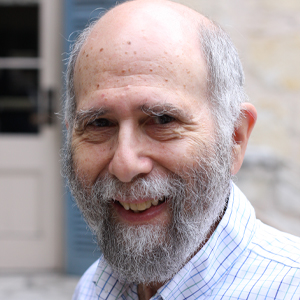
Considering the mild climate and relaxed, multicultural lifestyle, it's not surprising that San Antonio's population has doubled to nearly 1.5 million since 1975, the year I arrived as an assistant professor of biochemistry at the University of Texas at San Antonio.
San Antonio is the seventh largest city in the U.S. in terms of population, but it has a relatively small surrounding metropolitan area, which means research collaborations here occur over longer distances than in more densely populated regions. In my early days in San Antonio, I had to drive 90 miles to Austen Riggs' lab at UT Austin to do amino acid analyses, and I flew to Walter Stoeckenius' lab in San Francisco to do laser spectroscopy. I mailed membrane samples to Juan Yguerabide in San Diego for fluorescence depolarization measurements.
Incidentally, Juan grew up in Laredo, southwest of San Antonio, and he told me how important South Texas higher education was for starting him off on his scientific career, which led from physics to biophysics to membrane biochemistry. His experience underscores the significant role of universities in developing human potential in disadvantaged areas.
Today, San Antonio has a highly active network of researchers and research facilities at UTSA and the University of Texas Health Science Center, or UT Health, along with the Southwest Research Institute, the Texas Biomedical Research Institute and Brooke Army Medical Center.
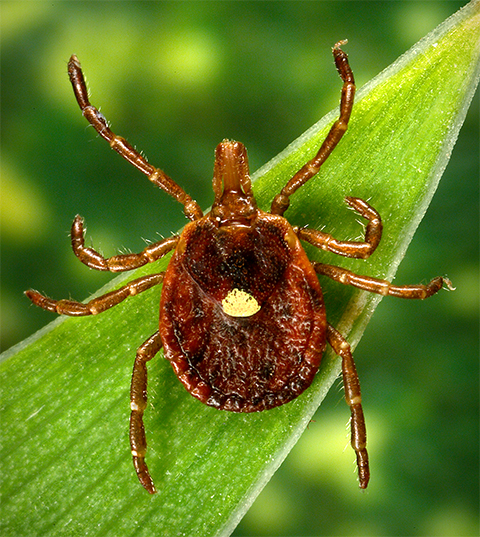
Lately, I've turned my attention to insect and tick biochemistry, making use of our first-rate mass spectrometry facilities at UTSA and UT Health. In one study of the cuticular lipids of the lone star tick, I found low ratios of sphingomyelin to phosphatidylcholine, or SM to PC, less than 1-to-5. I obtained the ticks from a U.S. Department of Agriculture Agricultural Research Service lab in nearby Kerrville, where they had been fed exclusively on bovine blood.
Curious about the lipid composition of bovine blood, I ran across a 1960 paper, in Volume 1 of the Journal of Lipid Research, by Don Hanahan, whom I knew when he was in San Antonio as chair of the UT Health biochemistry department during the 1970s and 1980s. Don reported that all the choline in bovine erythrocytes was on SM, resulting in blood with a high SM to PC ratio of 1-to-1. Lone star ticks must have very active choline transfer pathways to decrease their high SM levels when feeding on cattle, which might be a future target for the control of this pest. I’m sure Don would have been delighted to hear about an unexpected connection to his early lipid work.
By the way, you don’t need to worry about ticks in San Antonio if you stay near the convention center. But if you hike through the Hill Country north of the city, looking for wildflowers or birds, consider wearing permethrin-treated clothes. As early as mid-March, I’ve seen lone star ticks crawling around near my house, searching for a blood meal.
Submit an abstract
Discover BMB, the annual meeting of the American Society for Biochemistry and Molecular Biology, will be held March 23–26 in San Antonio. Abstracts for poster presentations and spotlight talks will be accepted through Nov. 30. See the poster categories and spotlight talk themes.
Enjoy reading ASBMB Today?
Become a member to receive the print edition four times a year and the digital edition monthly.
Learn moreGet the latest from ASBMB Today
Enter your email address, and we’ll send you a weekly email with recent articles, interviews and more.
Latest in People
People highlights or most popular articles
Uncovering the molecular roots of fatty liver disease
Physician–scientist Silvia Sookoian discusses her path from hepatitis C care to MASLD research, her use of multi-omics to study steatotic liver disease, and how lipid metabolism and genetics are reshaping understanding of MASH and liver health.
Kimble honored for lifetime achievement in genetics
She received the 2026 Thomas Hunt Morgan Medal and will be honored with a dedicated online profile and seminar.
Janetka named distinguished professor
Washington University awarded him the inaugural Carl Frieden Distinguished Professorship.
ASBMB members receive ASPET awards
The American Society for Pharmacology and Experimental Therapeutics awards Simone Brixius–Anderko, Paul Insel, Sudarshan Rajagopal, Emily Scott, Alan Smrcka and Jürgen Wess for their excellent research and mentoring work in pharmacology.
Kozul honored by Washington University
She received the 2025 Elliot L. Elson Education and Training Award.
de la Fuente honored for AI research
The award will support the development of an AI system called ApexMol, a 3D structure–informed, agentic large language model designed to create new biomolecules.